Evolution: Science or Philosophy?
by Andres J. Quesada on Tue Jun 09 2026
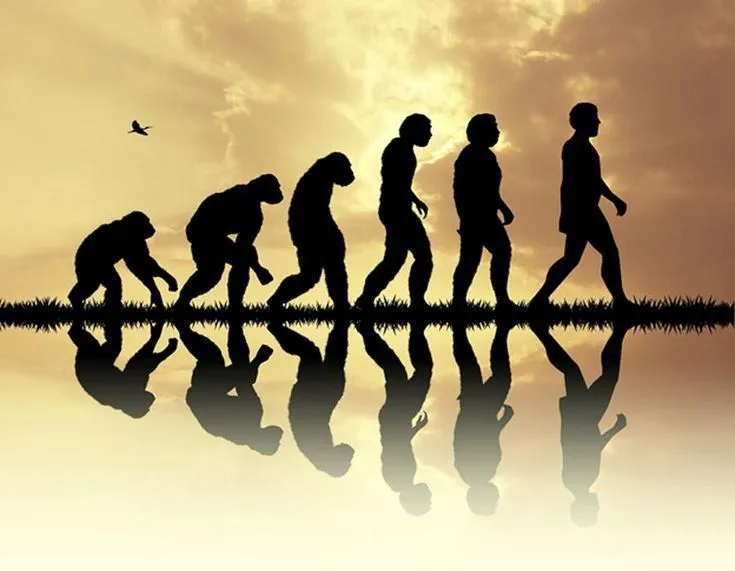
And God created man in His own image, in the image of God He created him; male and female He created them (Gen 2:27).
Most people go through life in a routine and mechanical way. They simply do what they see others doing. They shape their lives in light of the influences they receive. But no matter how much purpose and meaning they may wish to give their lives in practice, through goals and plans, they rarely reflect deeply and thoughtfully on the incredible miracle of life’s existence.
They never sit down to ask themselves: What is life? Where did it come from? Was there a beginning? Who are we? What is the purpose of living? Why are we here? These great existential questions are absent from the daily lives of millions of people.
Most of the philosophical systems that humans have created try to persuade us that seeking answers to these questions is a waste of time. In fact, merely asking them is a waste of time. The goal is to make us understand that where we come from or where we are going are things that don’t matter. What matters is the now, the present. The maxim is this: focus on yourself, on what you want, and live your life because that is all there is.
One of the philosophies that promotes this “deification of man” is Darwinian evolutionism, which reduces life to a completely fortuitous accident devoid of any purpose.
But is life an accident? How could it have arisen from nothing? How could it have evolved without any guiding intelligence or purpose? Is that really the logical explanation for all the wonder, beauty, and complexity we observe in the different forms of life inhabiting this planet? That is precisely what we will analyze in this article. We will examine what the scientific evidence tells us and draw conclusions.
Let’s start with the classic evolutionary proposal: life arose from nothing. It was not created by any supernatural or transcendent being. Quite simply, it arose from nothing, from a primordial soup of inert matter.
Although the theory of evolution has been widely accepted as “a proven fact,” more and more biologists, biochemists, and specialists from various branches of science—not just Christians—are raising serious objections to it.
The evidence has led many sincere scientists to acknowledge that the evolutionary mechanism proposed by Darwin does not hold up in the light of scientific evidence. But the problem with evolution is greater than we can imagine: biological evolution, something that scientific evidence does not support, could only have occurred after some kind of living matter capable of reproducing and gradually becoming more organized and complex through random mutations (in practice, we see that mutations are always harmful) had already existed—without any purpose or guiding intelligence. So, the fundamental question lies in understanding how life began when there was nothing. How could dead substances produce life?
At the time Darwin formulated his theory, scientific ignorance was so great that there was a popular belief that life arose spontaneously everywhere. People thought that maggots arose spontaneously from decaying meat, until Francesco Redi demonstrated that this was due to the eggs that flies laid in the meat. If the meat was isolated from flies, it would never produce maggots.
A little later, Louis Pasteur demonstrated that the air contains microorganisms capable of reproducing in water, giving the false impression of spontaneous generation of life. He demonstrated this by sterilizing a test tube and sealing it; the result: nothing comes from nothing. Even though scientists have acknowledged this truth, which has been widely corroborated by the scientific method, in their eagerness to deny the Creator, they have theorized that if given billions and billions of years, the impossible—the spontaneous emergence of life—could occur. But this is a matter of faith, not science, and in fact, a matter of irrational faith.
Living organisms basically perform three functions: storing energy, processing information, and self-reproducing. So, what is required to build a living organism? What are the odds that life could arise from dead matter?
To build a living organism, we basically start with amino acids. Amino acids are the structural units of proteins and perform a wide variety of functions. Now, there is a wide variety of different types of amino acids, but only 20 of them have been found in living beings because only these can form peptides and proteins.
The process involves isolating only the right amino acids and then linking them—via peptide bonds—in the correct sequence to form protein molecules. Remember that in chemical evolution, there is no intelligence guiding the process; everything has happened purely by chance. They have given this chance a name: randomness.
What has been described in general terms so far might seem simple, but it is far from it; there are many complications along the way. Amino acids tend to react with other molecules much more easily than with each other. This poses the problem of preventing those reactions and ensuring that the amino acids interact only with each other, since no one is directing the process; it is random and fortuitous.
But the complications don’t end there. There are an equal number of L-type and D-type amino acids, and only the L-type ones make up living matter. So, we must ensure that only the L-type amino acids bond together, forming the proper biochemical link so that the resulting protein molecule can fold into a specific three-dimensional shape; otherwise, nothing is achieved.
To form a single basic protein molecule, at least a hundred amino acids must link together properly—this is a basic example; there are much more complex molecules. But even once a protein molecule is formed, we haven’t gotten anywhere yet; there is still no life. To create a typical functional cell, about two hundred protein molecules—again, a basic example—with the appropriate functions and linked correctly are needed. Things are starting to get complicated! But there is an even bigger problem. All the information needed to organize things comes from the DNA molecule. Every cell, whether animal or plant, possesses this molecule.
The DNA molecule is a kind of automaton that regulates everything and works hand in hand with the RNA molecule to direct the exact sequence of amino acids for the creation of new cells. The encoded information is found in the DNA, and the RNA decodes that information. Wow! This leads us to ask, where did the DNA come from? Where did the RNA come from?
We’ve already seen how complex it is to create a protein molecule, especially if we expect it to form on its own by chance. But in the case of DNA and RNA, the complexity increases exponentially. The process of creating a DNA or RNA molecule presents far more practical problems than the process of creating a simple protein molecule. The 1967 Nobel Prize winner and co-discoverer of DNA, Sir Francis Crick, said the following:
The origin of life seems almost like a miracle; there are many conditions that had to be met to initiate it.
Taking into account everything I have just explained—and much more—the probabilities that life could have formed by chance, as proposed by chemical evolution, have been calculated, and the results are devastating for evolution. One of the most conservative estimates suggests that the probability of this having occurred is . A number of such immense magnitude that our minds are incapable of comprehending it. In the field of probability, an event with a probability of is considered impossible. And I have shown one of the most conservative estimates; there are calculations that suggest a probability of , and there are even higher ones.
The British mathematician and evolutionary astronomer Fred Hoyle (1915–2001) even calculated that the probability of a single cell forming in the primitive environment that evolutionists themselves have invented to validate their beliefs is And we’re talking about the calculations of a renowned evolutionist!
A moment ago, we quoted Francis Crick (1916–2004), who was one of the world’s most prominent scientists of his time, acknowledging how improbable it is that life arose as Darwinism posits. However, he was never willing to look in another direction. The problem of the origin of life is so complex that it is sheer folly to analyze the immense complexity involved in that process—a complexity that clearly points to design and intelligence—and then conclude that chance, given enough time, created everything. Just a pinch of common sense shows us that, in practice, what we can observe on a daily basis is that everything complex and functional is the result of intelligence, not chance. Evolutionists propose magic formulas for the emergence of things; let’s see:
NOTHING + CHANCE + TIME = A SINGLE CELL A SINGLE CELL + CHANCE + TIME = MAN
Take a good look at these equations—is this science or a fairy tale? It’s incredible to see how modern science rests on formulas as mythical as these. Evolutionists, relying on dialectical acrobatics—not on verified facts—and using these absurd equations as a basis, try to explain the emergence and development of everything.
But this cannot be called science. If nothingness, time, and chance are capable of producing living wonders like those we see everywhere, then scientists in their well-equipped laboratories, with their vast knowledge, should be able to produce eyes, hands, brains, hearts, etc., in a very short time.
Whoever stubbornly refuses to see the hand of a higher intelligence behind all this and wishes to continue appealing to the absurd and impossible notion of blind evolution, let him be with such fallacious reasoning. But let him not presume to accuse those who, on the basis of logic, conclude that the observed facts point to design rather than chance, of religious fanaticism.
The problem of fallen man is not intellectual, but moral. He will seek any pretext to avoid acknowledging the Creator and submitting to His will. But His great power and deity are clearly visible in created things, so that they have no excuse: For what may be known about God is plain to them, because God has made it plain to them. For His invisible attributes, His eternal power and divine nature, have been clearly seen since the creation of the world, being understood through the things that have been made, so that they are without excuse. For although they knew God, they neither glorified him as God nor gave thanks to him, but their thinking became futile and their foolish hearts were darkened (Rom 1:19-21).
God bless you.